Human Dignity
 Belief in the inherent dignity of the human person is the foundation of all Catholic social teaching. Human life is sacred, and the dignity of the human person is the starting point for a moral vision for society.
The principle of human dignity is grounded in the idea that the person is made in the image of God. The person is the clearest reflection of God among us. We are required to honor the human person, to give priority to the person
Community and the Common Good
In a culture driven by excessive individualism, our tradition proclaims that the person is not only sacred but also social. Human dignity can only be realised and protected in the context of relationships with the wider society.
How we organise our society, in economics and politics, in law and policy, directly affects human dignity and the capacity of individuals to grow in community. The obligation to "love our neighbor" has an individual dimension, but it also requires a broader social commitment. Everyone has a responsibility to contribute to the good of the whole society, to the common good.
Every person has a fundamental right to life and a right to those things required for human decency-starting with food, shelter and clothing, employment, health care, and education.
Option for the Poor and the Vulnerable

A basic moral test of society is how it treats its most vulnerable members. The poor have the most urgent moral claim on the conscience of the nation.
The obligation to evaluate social and economic activity from the viewpoint of the poor and the powerless arises from the radical command to love one's neighbor as one's self. The option for the poor is an essential part of society's effort to acheive the common good. A healthy community can be acheived only if it's members give special attention to those with special needs, to those who are poor and on the margins of society.
Participation
All people have a right to participate in the economic, political, and cultural life of society. it is fundamental demand of justice and a requirement for human dignity that all people be assured a minimum level of participation in the community.
It is wrong for a person or a group to be excluded un fairly or to be unable to participate in society.
Dignity or Work/Rights of Workers
The economy ust serve the people, not the other way around. All workers have a right to productive work, decent and fair wages and to safe working conditions. They also have a fundamental right to organise and join unions.
People have a right to economic initiative and private property, but these rights have limits. No one is allowed to amass excessive wealth when others lack the basci necessities of life.
Stewardship of Creation
Catholic tradition insists that we show our respect for the Creator by our stewardship of creation. The goods of the earth are gifts from God, intended for the benefit of all.
We humans are not the ultimate owners of these goods, but rather, the temporary stewards. We are intrusted with the responsibility of caring for these gifts and preserving them for future generations.
Global Solidarity
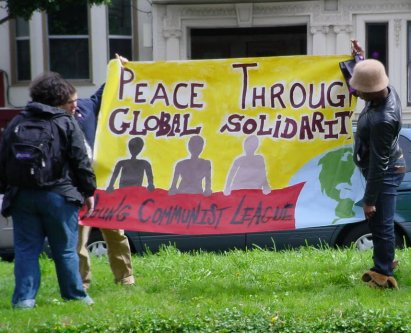 Catholic social teaching proclaims that we are our brothers and sisters keepers, wherever they live. We are one human family, whatever our national, racial, ethnic, economic and ideological differences. Solidarity means that "loving our neighbour" has global dimensions in an interdependent world.
John Paul II has called solidarity a virtue. It is the virtue, he says, by which we demonstrate "a firm and perservering determination to commit oneself to the common good...because we are all really responsible for all."
Constructive Role for Government
Becausewe are social beings, the state is natural to the person. Therefore, the state has a positive moral function. It is an instrument to promote human dignity, protect human rights, and build the common good.
One of the key functions of government is to assisst citizens in fulfiling their responsibility to others in society. Since, in a large and complex society these responsibilities cannot adequately be carried out on a one-to-one basis, citizens need the help of a government in fulfilling these responsibilities and promoting the common good.
Promotion of Peace
Pope John Paul II, "Peace is not just the absence of war. It involves mutual respect and confidence between peoples and nations. It involves collabration and binding agreements."

1. List the 5 issues social justice aims to cover
5 social justice issues that social justice aims to cover are;
· Poverty
· Child Labour
· Refugees
· Homelessness
· Hunger
2. In your own words explain what is meant by human dignity
Human dignity is believing that everyone is of worth and that have self-respect. Every human is made in God’s image and made by God.
3. What is meant by a moral vision for society?
Aiming to do well for all levels in society.
4. Which of the 5 social justices relates to human dignity?
All of the above issues relate to human dignity.
5. Give an example of a community that you are part of.
Stella Maris College community
6. How is this community both Sacred and Social?
Stella Maris College is a catholic girl’s school and we uphold the catholic faith. It is social because of our connection with our friends here.
7. What is the major test of a moral society?
How a community treats their most vulnerable members of society.
8. In what way does our community look after the poor?
Vinnies, Salvos, Red Cross, World Vision, Caritas, Medicare, soup kitchens, meals on wheels, mission beat and the church.
9. What are every human’s fundamental rights?
Every human has a fundamental right to life and a right to those things required for human decency-starting with food, shelter and clothing, employment, health care and education.
10. What is the role of the government in maintaining human rights?
To promote human dignity, protect human right and build the common good.
11. Who is responsible for assisting the government to achieve its goals?
All people are responsible by voting.


